
Race Win SR and Race Place SR
A run is only as good as the race it came in. Race Win SR and Race Place SR tell you whether the rivals from that race have gone on to win and place since.
"Has that race worked out?" is one of the oldest questions in form study. On a horse's history page, two columns now answer it with numbers: Race Win SR and Race Place SR.
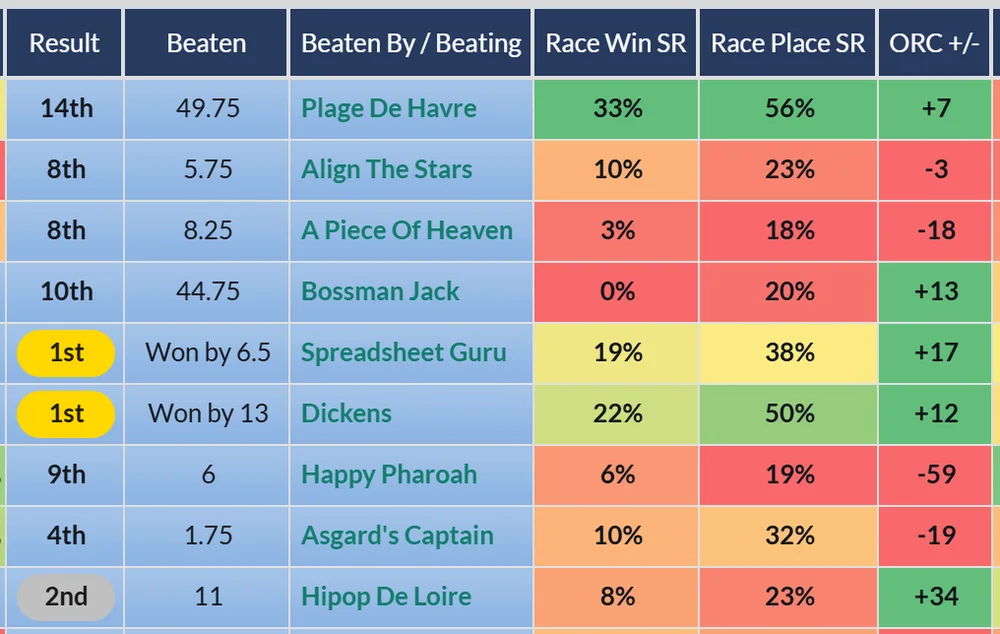
What they measure
For each race on the page, take every run the horses from that race have had since, up to today:
- Race Win SR: the share of those runs that were wins.
- Race Place SR: the share that placed, with a win counting as a place too.
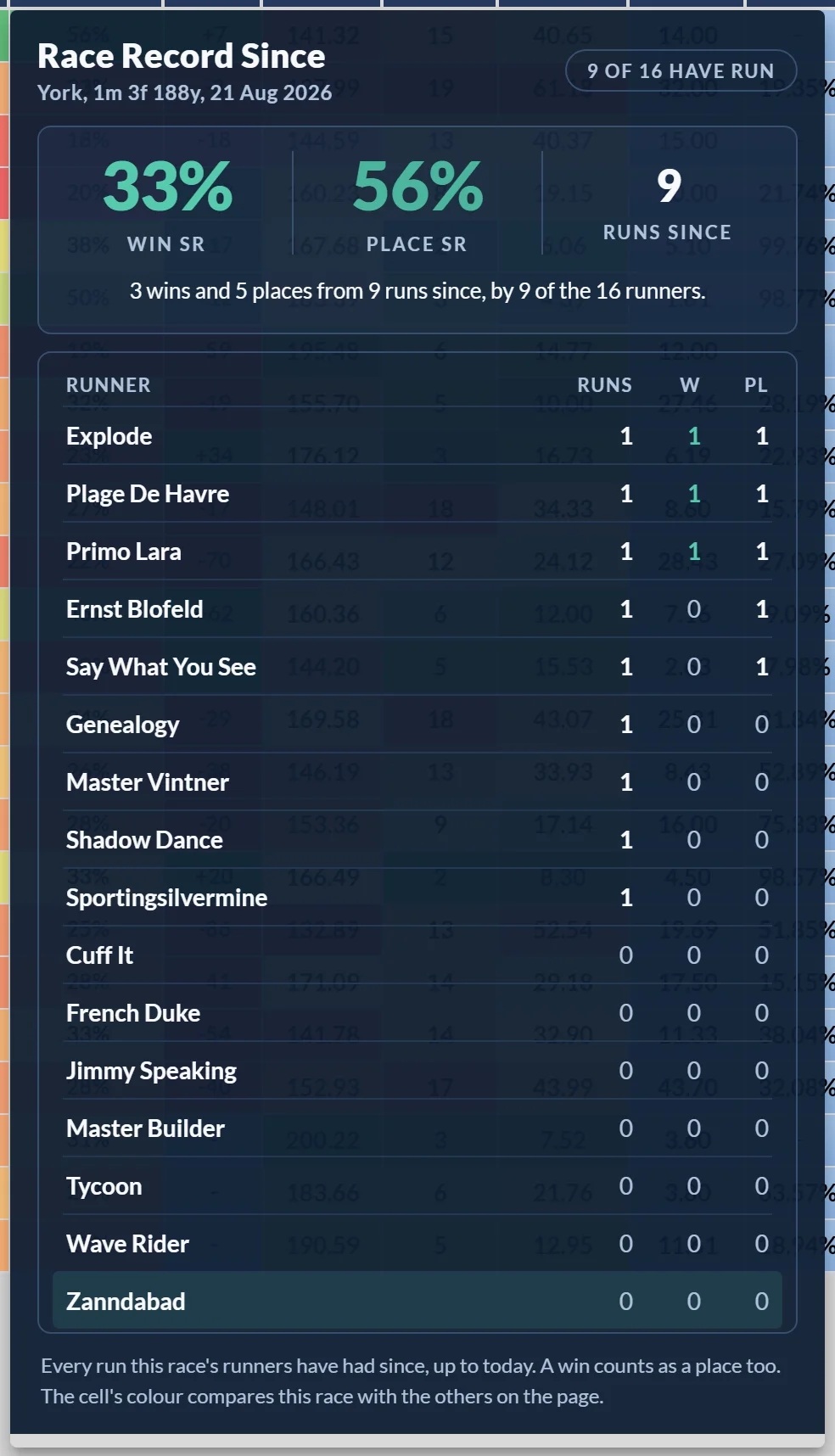
They're counted in runs, not horses, so a rival that has run three times since counts three times. If a race's runners have run 9 times between them since, with 3 wins, its Race Win SR reads 33%.
A high figure means the race is working out: the horses it was run against have proven themselves since, so a good run in it deserves more credit. A low figure means the form has not been franked.
Excl: the same figures without this horse
Beside each column is an (Excl) version: Race Win SR (Excl) and Race Place SR (Excl). They're worked out exactly the same way, but with the horse whose history you're reading left out.
That matters because the horse's own later runs count in the normal figures. Take a horse that won a race and then won its next ten: that race reads 10 wins from 11 runs since and looks like a hot race, even if nothing else from it has won. With the horse left out it reads 0 from 1, which is the truth about the rivals.
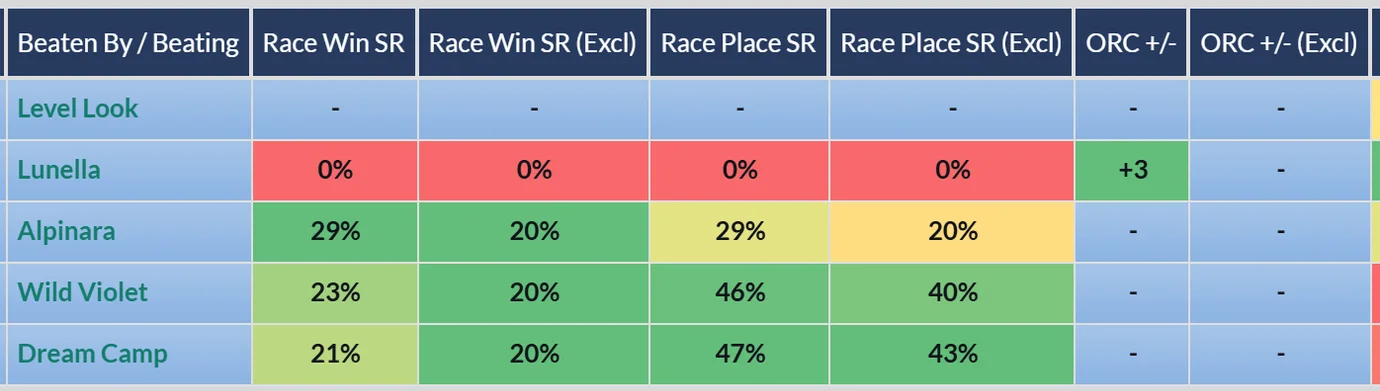
So read the pair together:
- Race Win SR tells you how the whole race has worked out, this horse included.
- Race Win SR (Excl) tells you how the rivals have fared, so the horse can't frank its own form.
When the two are close, the race's strength doesn't hinge on this horse. When the normal figure is much higher, it's largely this horse's own record doing the work. You can show or hide either version with Select Columns on the history page, and that choice only changes history pages, not your racecards.
Reading the colours
Each cell is filled on the table's green to red scale, comparing that race with the other races on the page: greenest for the races working out best, red for the weakest. A dash means none of that race's runners has run again yet. The (Excl) cells are coloured against each other in the same way, and show a dash when none of the other runners has run since.
Hover for the detail
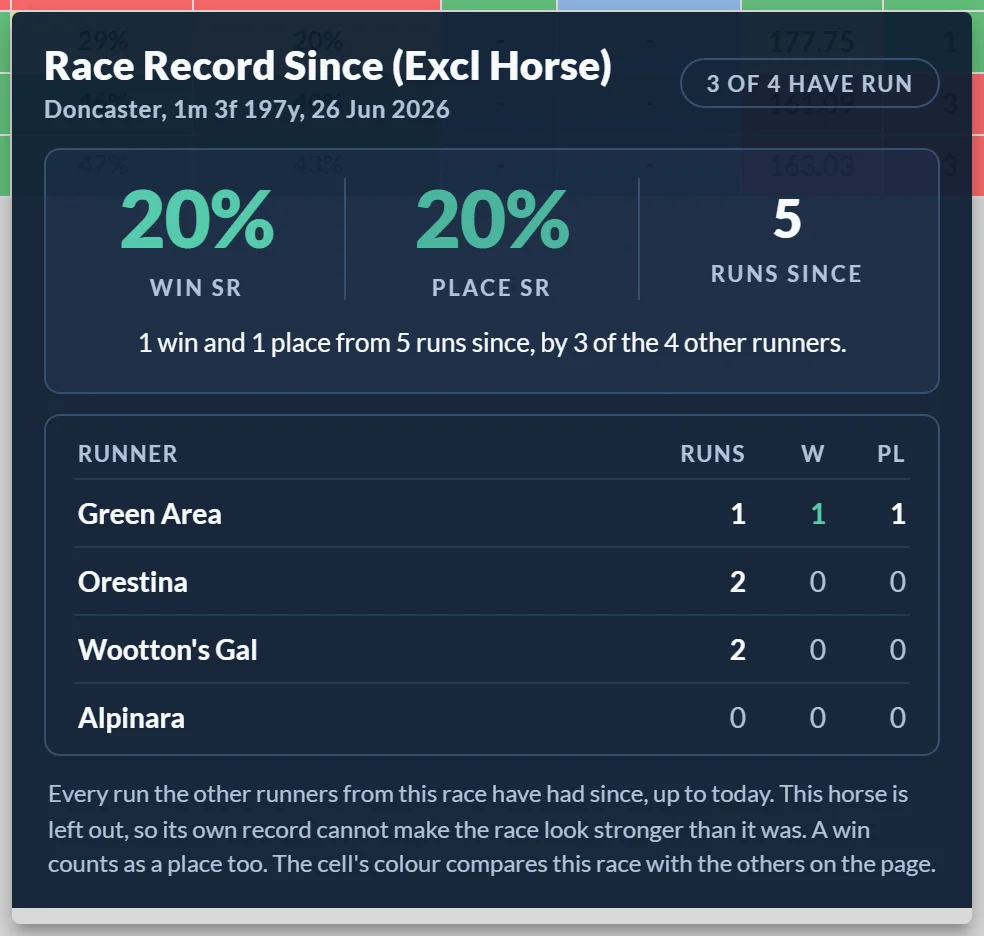
Hover either cell for the Race Record Since card: how many of the field have run again, both strike rates, the total runs since, and every runner with its own runs, wins and places since, the horse you're looking at included. Hover an (Excl) cell and you get the same card as Race Record Since (Excl Horse), with this horse taken out of the runner list.
Where they fit
The racecard does the same for a horse's last run: hover its LR O/R figure for the race form since, see the ratings columns reference. And for how the handicapper has rated those same runners since, see ORC +/-. To see exactly who beat a horse in each race, there's Beaten By / Beating.
Was this article helpful?